Short answer
Greco di Tufo is a dry white wine and DOCG from the village of Tufo in Irpinia, Campania, made from the Greco grape. The taste is taut and structured with citrus, green pear, bitter almond and a smoky, sulphurous minerality from the volcanic tuff. Serve at 10–12 °C alongside shellfish, pasta with vongole, grilled fish and fried vegetables.
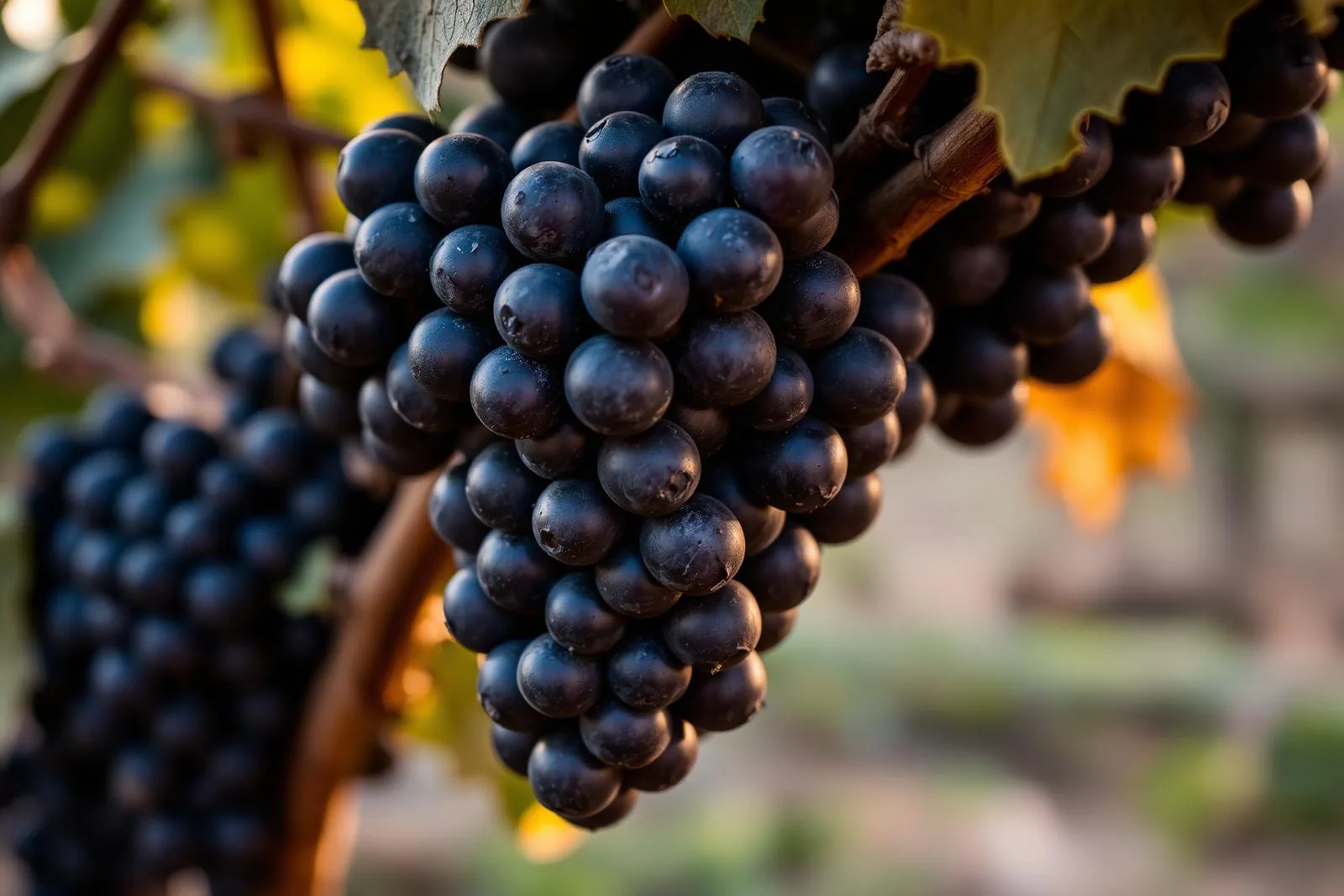
Greco is Campania's tautest white grape — more structure than charm, more mineral than fruit. In the village of Tufo in Irpinia, where the soils contain sulphur and volcanic tuff, it gives wines with an almost smoky salinity and an acidity that keeps them lively for years. Read more about the Irpinia district and the neighbouring varieties Fiano, Falanghina and Aglianico.
The soils of Tufo
Tufo takes its name from tufo — the porous volcanic rock that makes up the slopes. Sulphur was also mined in the village during the 19th and 20th centuries, and these sulphur-rich clay soils are thought to be the source of the smoky, almost struck-match note that sets Greco di Tufo apart from every other Italian white wine. The vines stand at 400–600 metres, where cool nights preserve acidity through the late ripening.
Ageing potential
Greco di Tufo is one of the few southern Italian white wines that truly rewards patience. High acidity and phenolic structure carry the wine for five to ten years. After three to four years the citrus softens and gives way to honey, hazelnut, wax and a more pronounced smokiness — a development reminiscent of mature Chablis or dry Riesling. Riserva wines have the longest ageing potential.
History
The name tells the story: Greco points to a supposed Greek origin. Greek colonists brought vines to southern Italy — Magna Graecia — more than 2,500 years ago, and the grape is linked to the ancient Aminea Gemina grown around Vesuvius. Several unrelated Italian varieties carry the name Greco today, but it is Greco di Tufo that has made the name famous.
Winegrowing in Tufo took its modern shape in the 19th century, partly thanks to the local sulphur mining that drew in labour and capital. Greco di Tufo was awarded DOCG status in 2003 and is today regarded as one of southern Italy's finest white wines.
Where it grows
- Campania — Tufo and the neighbouring villages in Irpinia, at 400–600 metres in sulphur- and tuff-rich clay
- Calabria — Greco Bianco is used for the sweet dessert wine Greco di Bianco
- Puglia and Basilicata — smaller plantings, often used in blends
Classifications: DOCG, IGP and styles
- Greco di Tufo DOCG — the classic, strictly delimited appellation around the village of Tufo and the neighbouring communes in Irpinia. At least 85% Greco, the rest Coda di Volpe. Dry, taut and mineral.
- Greco di Tufo DOCG Riserva — requires at least one extra year of ageing beyond the base wine, often with some oak or extended lees ageing. Fuller and more age-worthy.
- Greco di Tufo DOCG Spumante — a sparkling version of the same appellation, made either by the metodo classico or the charmat method. High acidity and minerality suit the grape well for bubbles.
- Campania Greco IGP — a broader, region-wide designation that allows grapes from outside Tufo's DOCG boundary and higher yields. Usually simpler, fruitier wines.
- Greco di Bianco DOC — an entirely different wine from Calabria, made from the unrelated Greco Bianco grape. Usually a sweet passito from dried grapes, not to be confused with the dry Greco di Tufo.
Greco Bianco versus Greco di Tufo is a common source of confusion: the same word, but different grapes, regions and styles — rather like the Montepulciano grape and the town of Montepulciano in Tuscany.
Flavour profile
- Fruit: citrus, green pear, peach and yellow apple
- Nuts: bitter almond — the grape's most typical trait in the finish
- Floral: white flowers and a hint of chamomile
- Mineral: smoke, flint, sulphur and salt
The wine is dry with high acidity, a medium to full body and a distinct phenolic structure that can almost read as a light austerity. The colour is straw yellow, and the alcohol sits at 12.5–13.5%.
Viticulture and winemaking
Greco is a demanding variety: its compact bunches make it prone to rot, and it ripens late — often not until October. The altitude in Irpinia and the cool nights are therefore crucial for both vine health and aroma.
Most wines are fermented cool in stainless steel and rest on the lees for a few months to round out the structure. Some producers use large oak casks or amphorae for their more ambitious cuvées. Greco has unusually good ageing potential for a southern Italian white and develops honey, nuts and petrol-like notes after five years or more.
Food pairing
- Fish and shellfish
- Grilled fish, mussels, squid, spaghetti alle vongole and fried small fish.
- Vegetables and pasta
- Fried vegetables, artichoke, pasta with lemon or pistachio pesto.
- Meat and cheese
- Chicken with lemon, veal, mozzarella di bufala and young goat's cheeses.
Greco vs Fiano and Falanghina
Fiano is rounder and nuttier, with honey and pear. Falanghina is fresher and more floral, with yellow stone fruit. Greco is the tautest of the three — higher acidity, more mineral, and a bitter almond note that makes it an excellent food wine but less immediately flattering in the glass.
What does a good Greco di Tufo cost?
Simple Greco di Tufo DOCG can be found from just under SEK 100 and already offers a distinct, saline minerality that sets it apart from cheaper whites. Between SEK 150 and 250 you find wines from older vines and lower yields, with more concentration and a longer finish. Riserva and single-vineyard bottlings (cru) from the most respected producers, such as Mastroberardino, Feudi di San Gregorio and Cantine di Marzo, can cost considerably more but reward with depth and ageing potential.
Greco di Tufo wine — how to recognise it
Greco di Tufo wine comes from a small area around the village of Tufo in Irpinia, where the soil is rich in sulphur and volcanic tuff. That gives the wine its signature: a smoky, almost flinty minerality beneath yellow stone fruit, pear and bitter almond.
The colour is more golden than most Italian white wines, and the body is surprisingly full — Greco di Tufo is regarded as one of the few Italian whites that benefits from a few years in bottle. After three to five years honey and dried herbs develop without the acidity losing its edge.
The Greco di Tufo DOCG designation guarantees the origin. Our Sepofà shows the style: dry, saline and structured, made for fish, shellfish and dishes with lemon and herbs.
Serving
- Serve at 10–12 °C
- A medium to large white wine glass
- Give young wines 15–20 minutes in the glass — they open slowly
- Drink within 2–4 years, top wines 5–8 years
Frequently asked questions
- What kind of grape is Greco?
- A white variety from Campania, best known through Greco di Tufo DOCG. It gives taut wines with citrus, bitter almond and a distinct minerality.
- Why is the grape called Greco?
- The name points to a supposed Greek origin — Greek colonists brought vines to Magna Graecia more than 2,500 years ago.
- What does Greco wine taste like?
- Dry and structured with high acidity, citrus, pear, white flowers, smoky minerality and a bitter almond note in the finish.
- What food goes with Greco?
- Shellfish, grilled fish, vongole, fried vegetables, chicken with lemon and mozzarella di bufala.
- What is Greco di Tufo?
- A DOCG in Irpinia named after the village of Tufo, where sulphur- and tuff-rich soils give the wines their characteristic smoky minerality.
- What is the difference between Greco di Tufo and Greco di Bianco?
- Greco di Tufo is made from the Greco grape in Campania and gives dry, mineral wines. Greco di Bianco comes from Calabria and is made from the unrelated Greco Bianco grape, usually as a sweet passito dessert wine from dried grapes. The name is the same, but the grape and style are entirely different.
- Is there a sparkling Greco di Tufo?
- Yes, Greco di Tufo DOCG also allows for spumante, made either by the metodo classico or the charmat method. The high acidity and minerality suit sparkling wine well, though the still wine is the most common and best known style.
- What is Greco di Tufo Riserva?
- Riserva requires at least one extra year of ageing beyond the base wine before release, often with some oak ageing or extended lees contact. The result is fuller, more complex wines with good ageing potential, made to be drunk after three to five years or more.
- What does a good Greco di Tufo cost?
- Simple Greco di Tufo DOCG starts from just under SEK 100. Between SEK 150 and 250 you find wines with lower yields, older vines and clearer minerality, and Riserva and single-vineyard wines from the best producers can cost considerably more.
- How does Campania Greco IGP differ from Greco di Tufo DOCG?
- Campania Greco IGP is a broader designation covering the whole region, allowing grapes from outside Tufo's strict DOCG boundary and higher yields. Greco di Tufo DOCG is limited to a small area around the village of Tufo with stricter rules and is considered to give the most concentrated wines.
In our range