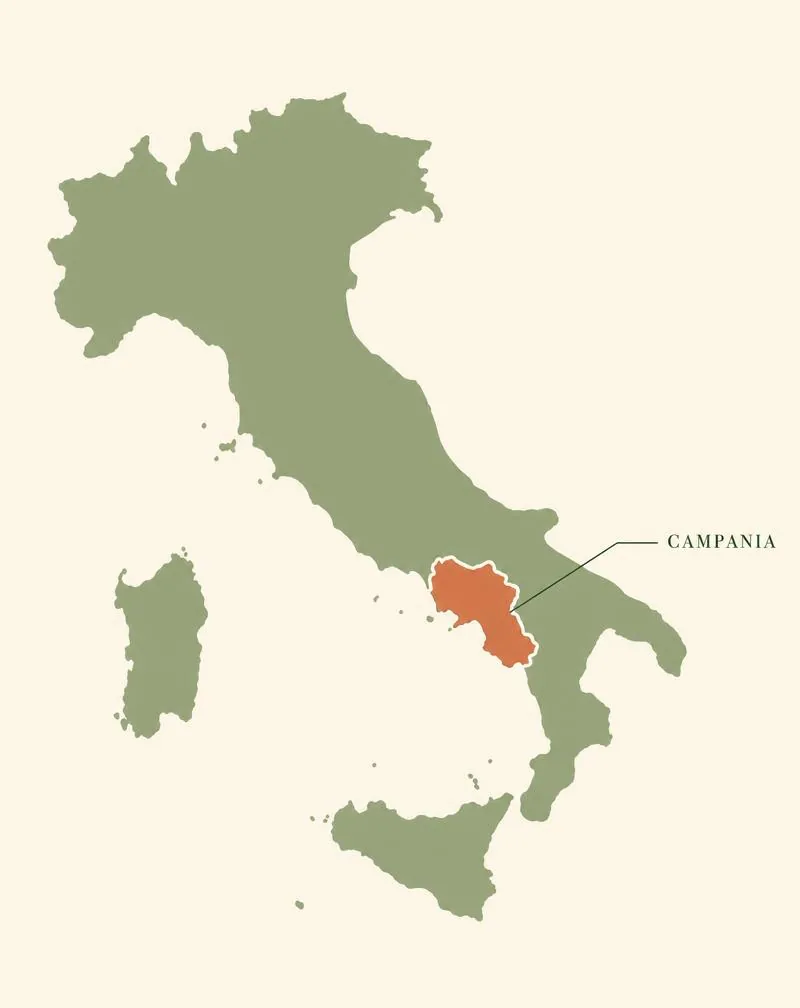
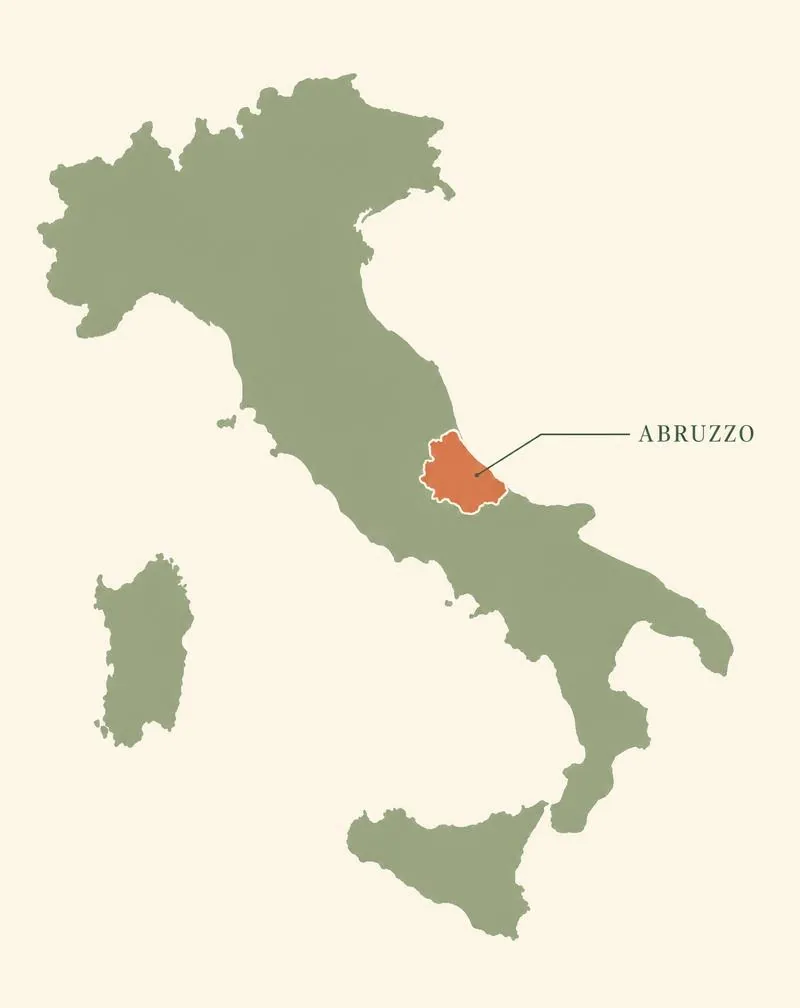
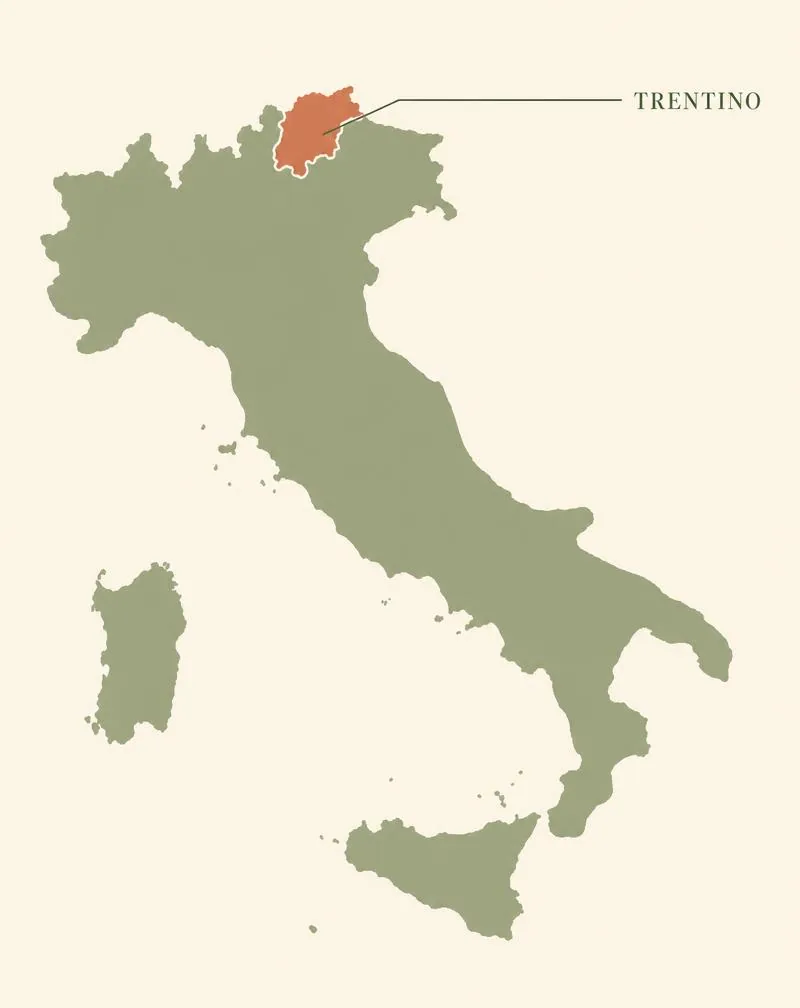
Italy has twenty wine regions — from the alpine valleys in the north to the volcanic hills of the south. Climate, soil and grapes give every district its own voice. These are the regions iVino sources from, and what makes them unique.
Volcanic soils from Vesuvius, high hills at 400–700 m above sea level and wide day-to-night temperature swings that give fresh, mineral wines.
Character
Southern Italy's answer to Burgundy — slow-maturing reds with structure and whites with a straight-backed acidity. The DOCG appellations Taurasi, Fiano di Avellino and Greco di Tufo all belong here.
Wine region or wine district – what's the difference?
Wine region
Italy is divided into 20 official regions, such as Campania, Abruzzo and Trentino-Alto Adige. The region is the broad geographical frame and often appears on labels in wider designations like IGT.
Wine district
A wine district is a smaller area within a region, with its own soil, microclimate and stricter rules (DOC and DOCG). Irpinia in Campania is one example – home of Taurasi, Greco di Tufo and Fiano di Avellino.
La legge del vino
Italian wine law – DOCG, DOC and IGT explained
Italian wine law sorts wines into a quality pyramid. The higher the level, the stricter the rules on grapes, yields, alcohol and ageing. Each designation has its own production rules, the disciplinare di produzione, based on EU wine legislation.
DOCG – Denominazione di Origine Controllata e Garantita
The top tier. Wines are tasted and analysed by an official panel, and every bottle carries a numbered neck strip.
Examples: Taurasi DOCG, Greco di Tufo DOCG, Fiano di Avellino DOCG.
DOC – Denominazione di Origine Controllata
Controlled origin with fixed rules on permitted grapes, maximum yields and ageing within a defined wine district.