Short answer
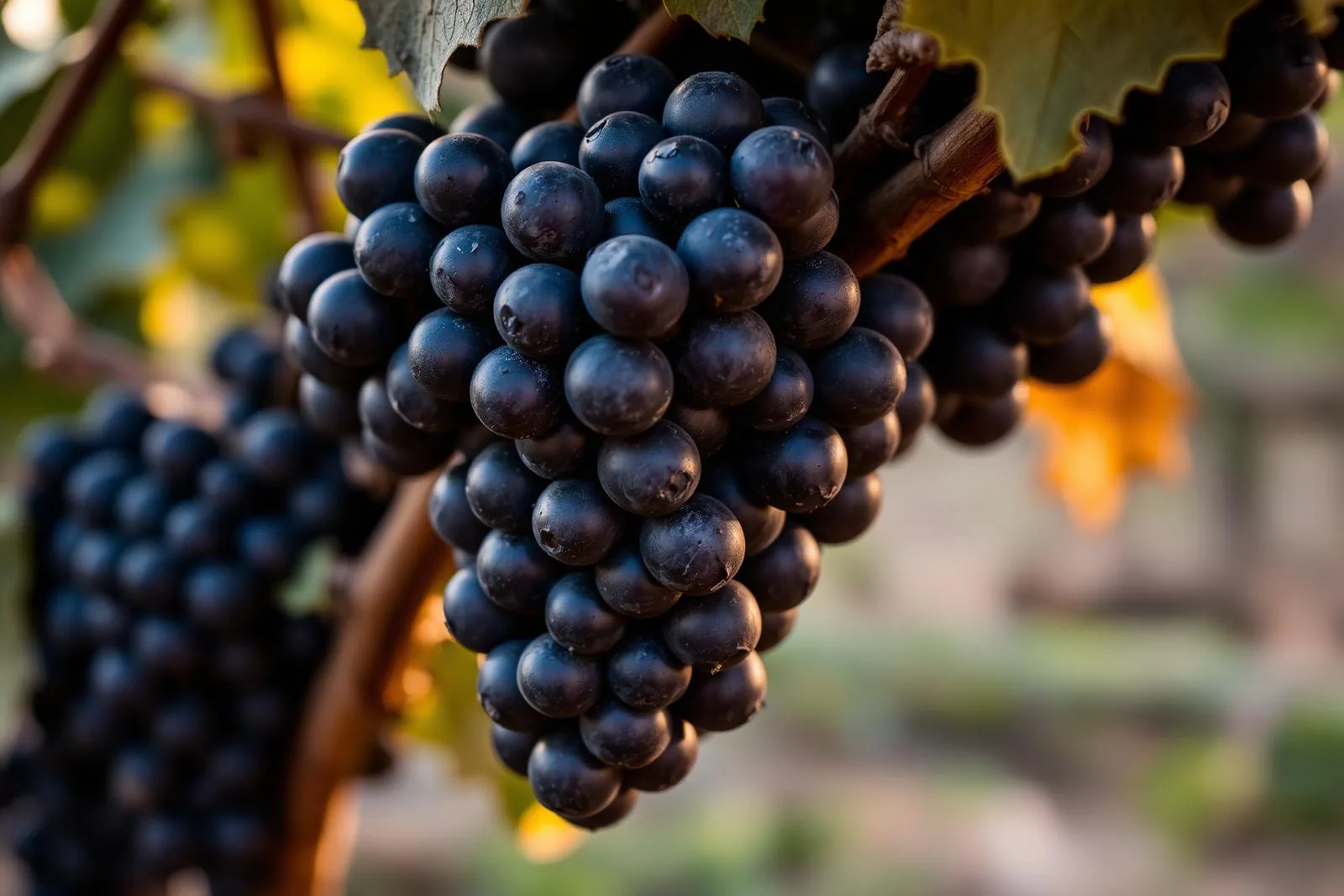
Aglianico is a dark, late-ripening grape from Campania and Basilicata in southern Italy — often called "the Barolo of the south" for its high acidity, powerful tannins and long ageing potential. The wine is deep garnet with dark cherry, tobacco, coffee and a smoky volcanic minerality. Serve at 17–18 °C, ideally after decanting, alongside grilled meat, lamb, wild boar and aged hard cheeses.
Aglianico is often called the Barolo of the south — and that's no exaggeration. The grape ripens late, carries high acidity and powerful tannins, and gives wines that demand time but reward the patience with a depth few Italian varieties can match. It's at home in the volcanic soils of Campania and Basilicata, where ash from Vesuvius and Monte Vulture gives the wines their characteristic smokiness. Read more about the other great red varieties Montepulciano and Nebbiolo, and about the Italian wine regions.
History
Aglianico is one of Italy's oldest cultivated grapes. It was already grown in antiquity in Campania, and many believe it was part of the Roman cult wine Falernum. The name was long thought to derive from ellenico — Greek — but linguists today lean towards an origin in the Spanish llano (plain), from the Aragonese period in the 1400s. Whatever the etymology, the grape is deeply rooted in the south's wine history.
Through the twentieth century Aglianico long lived in the shadow of northern Italian wines, but Taurasi in Irpinia became southern Italy's first red DOCG in 1993, putting the grape back on the map. Today it is regarded as one of Italy's three great reds alongside Nebbiolo and Sangiovese.
Where it grows
- Campania — Irpinia and Taurasi DOCG, at 400–700 metres in the mountains east of Naples
- Basilicata — Aglianico del Vulture DOC/DOCG on the slopes of the extinct volcano Monte Vulture
- Molise and Puglia — smaller plantings, usually in a simpler style
Volcanic soil, altitude and wide diurnal swings are the common thread. Harvest comes late — often at the end of October or into November, among the last in all of Italy.
Volcanic terroir
Few Italian grapes are as closely tied to their soil as Aglianico. In Basilicata the vines grow directly in weathered lava, ash and tuff from Monte Vulture, a volcano that has been dormant for tens of thousands of years but whose mineral-rich soils still shape the flavour — smoke, iron and a salty, stony undertone. In Irpinia in Campania the soil is a mix of volcanic ash over limestone and clay, which gives Taurasi its combination of power and structure.
Altitude plays an equally important role: many of the best vineyards sit at 400–700 metres, where wide swings between day and night temperatures preserve the grape's acidity despite the warm southern climate. The combination of volcanic soil, altitude and late ripening is what gives Aglianico its unique, long-lived character.
Flavour profile
- Fruit: dark cherry, plum, blackberry and dried red berries
- Spice: liquorice, tobacco, coffee, cocoa and black pepper
- Mineral: smoke, ash and iron from the volcanic soils
- Structure: high acidity and firm, fine-grained tannins
The colour is deep garnet, often with a brick-red rim after a few years. With age comes leather, dried flowers, balsamic notes and undergrowth.
Viticulture and winemaking
Late ripening is the grape's signature and its greatest challenge — an early autumn rain can jeopardise the whole harvest. Thick skins give a lot of colour and tannin, which requires careful extraction so the wine doesn't turn hard.
Traditionally the wine is aged for a long time in large oak casks; modern producers often use barrique to round out the tannins. Taurasi requires at least three years of ageing, one of them in wood, before release. Young Aglianico can taste austere and benefits from food or a few years in the cellar.
The vines are often trained on low guyot or cordon systems on terraced slopes, which makes hand-harvesting easier in the mountainous landscape. Many of the most respected producers still work with old, ungrafted vines (grown on their own roots), since the volcanic sandy soils of Basilicata have made phylloxera less of a problem here than elsewhere in Europe.
Classifications: DOCG, DOC and subzones
- Taurasi DOCG — Campania's and the south's most respected red appellation, in Irpinia east of Avellino. Requires at least 85% Aglianico and a minimum of three years' ageing, one of them in wood; Riserva requires four years.
- Aglianico del Vulture DOC and Aglianico del Vulture Superiore DOCG — in Basilicata, on pure volcanic soil around Monte Vulture. Superiore demands longer ageing and lower yields, giving the region's most concentrated wines.
- Irpinia Aglianico DOC — a freer, more accessible designation in the same area as Taurasi, with shorter ageing requirements and often a more fruit-driven style.
- Falerno del Massico DOC — northern Campania, around the site of the ancient Falernum, where Aglianico is often blended with Piedirosso.
- Cilento DOC — south of Salerno, a lesser-known but growing zone for Aglianico in a somewhat softer, fruitier style.
- Campania IGT and Basilicata IGT — freer designations for simpler or more experimental wines, often good value and ready to drink young.
Food pairing
- Meat
- Grilled lamb, wild boar, beef cheek, entrecôte and slow-cooked stews with rosemary.
- Pasta and mushrooms
- Ragù of lamb or wild boar, lasagne, porcini risotto and truffle dishes.
- Cheese
- Aged pecorino, caciocavallo and spicy provolone.
Avoid light fish dishes and sweetness — the tannins quickly turn hard and bitter alongside them.
Aglianico vs Nebbiolo, Sangiovese and Montepulciano
Nebbiolo is lighter in colour but just as taut, with rose, tar and cherry. Aglianico is darker and smokier with more pronounced black fruit. Sangiovese sits between the two in weight but has a more acidic, cherry-driven character and lacks Aglianico's volcanic minerality. Montepulciano from Abruzzo is the softest of them all — rounder tannins, lower acidity and immediately approachable, while Aglianico needs time to show its full potential.
Aglianico wine — what you get in the glass
An Aglianico wine is dark, taut and built for food. The colour is deep ruby, the aroma leans towards cherry, plum, tobacco and a smoky note from the volcanic soil. On the palate you meet high acidity and firm tannins — the grape's signature and the reason the wines age so well.
The two best-known origins are Taurasi DOCG in Irpinia and Aglianico del Vulture in Basilicata. Simpler Aglianico from Campania IGT is lighter and drunk young, while riserva wines need five to ten years before the tannins soften.
If the wine is young, decant it for an hour and serve with lamb, grilled red meat or aged cheese.
Vintages and ageing
Aglianico's late ripening makes vintage variation greater than for most Italian red grapes. A warm, dry end to the season gives full, dark wines with softer tannins, while rain in October–November can force an earlier harvest and taut, more acidic wines. In Basilicata, altitude and volcanic soil often protect against the worst weather swings, while Irpinia's limestone soils give more consistent quality year on year.
- Simpler Aglianico (Campania/Basilicata IGT, Irpinia DOC): drink within 3–5 years
- Taurasi DOCG: rarely opens up before 5–6 years and often develops over 15–20 years
- Aglianico del Vulture Superiore DOCG: 15–25 years, longer at its best
- Riserva versions: often need a few extra years beyond the base version before the tannins fully soften
What does a good Aglianico cost?
Aglianico still offers a lot of wine for the money compared with equivalent northern Italian classics. Simpler wines from Campania IGT or Basilicata, made to be drunk young, often cost SEK 120–180. Taurasi and Aglianico del Vulture Superiore from serious producers normally sit between SEK 250 and 500 — a fair price given the long ageing and craftsmanship required. The most respected single-vineyard bottles and older vintages can cost considerably more.
For anyone wanting to discover the grape without investing in age-worthy wines, Irpinia Aglianico DOC or simpler Vulture wines are a good entry point. Contact us if you would like suggestions from our range.
Serving and decanting
- Serve at 17–18 °C in a large red wine glass
- Decant for 1–2 hours, especially young wines — Taurasi and Vulture Superiore often benefit from even longer aeration
- Simpler wines are best drunk within 3–5 years
- Taurasi and Vulture Superiore develop over 15–25 years
- If the wine is young and austere, consider opening the bottle right at the start of dinner
Frequently asked questions
- What kind of grape is Aglianico?
- A dark grape variety from southern Italy, mainly Campania and Basilicata. It gives dark, taut wines with high acidity and powerful tannins, often with decades of ageing potential.
- Why is Aglianico called the Barolo of the south?
- Like Nebbiolo, it ripens very late, has high acidity and powerful tannins, and needs several years in bottle before it opens up.
- What does Aglianico wine taste like?
- Dark cherry, plum and blackberry with liquorice, tobacco, coffee and a smoky volcanic minerality — taut with a long finish.
- What food goes with Aglianico?
- Grilled and slow-cooked meat, lamb, wild boar, ragù, hard aged cheeses such as pecorino and caciocavallo, and mushroom or truffle dishes.
- How long can Aglianico be cellared?
- Simpler wines are best drunk within 3–5 years, while Taurasi and Aglianico del Vulture Superiore often develop over 15–25 years and need at least 5 years before the tannins soften.
- What is the difference between Taurasi and Aglianico del Vulture?
- Taurasi DOCG comes from Irpinia in Campania and is often grown on limestone-rich clay at altitude, giving a taut, firm structure. Aglianico del Vulture in Basilicata grows on pure volcanic soil around the extinct volcano Monte Vulture, giving a smokier, more mineral character. Both can age for a long time, but they differ in mineral tone and fruit character.
- What does a good Aglianico cost?
- Simple wines from Campania IGT or Basilicata often cost SEK 120–180. Taurasi and Aglianico del Vulture Superiore from serious producers normally sit between SEK 250 and 500, while the most respected bottles can cost considerably more.
- Should Aglianico be decanted?
- Yes, especially young wines. Decant Taurasi or Aglianico del Vulture for at least one to two hours before serving so the taut tannins soften and the aroma opens up.
- Is Aglianico the same grape as Aglianicone?
- No. Aglianicone is a different, less prestigious grape variety historically confused with Aglianico because of the similar name, but the two are genetically distinct and give different wines.
In our range