Short answer
Moscato Giallo — Goldmuskateller in German — is an aromatic yellow muscat grape from Trentino-Alto Adige, Veneto and Friuli. Unlike Moscato Bianco (the grape behind Moscato d'Asti), it is usually made as a dry or off-dry food wine with aromas of orange blossom, nutmeg and honey, high acidity and a medium body — but also as sweet passito wines. Serve at 8–12 °C alongside spicy food, sushi and goat's cheese, while passito suits desserts and blue cheese.
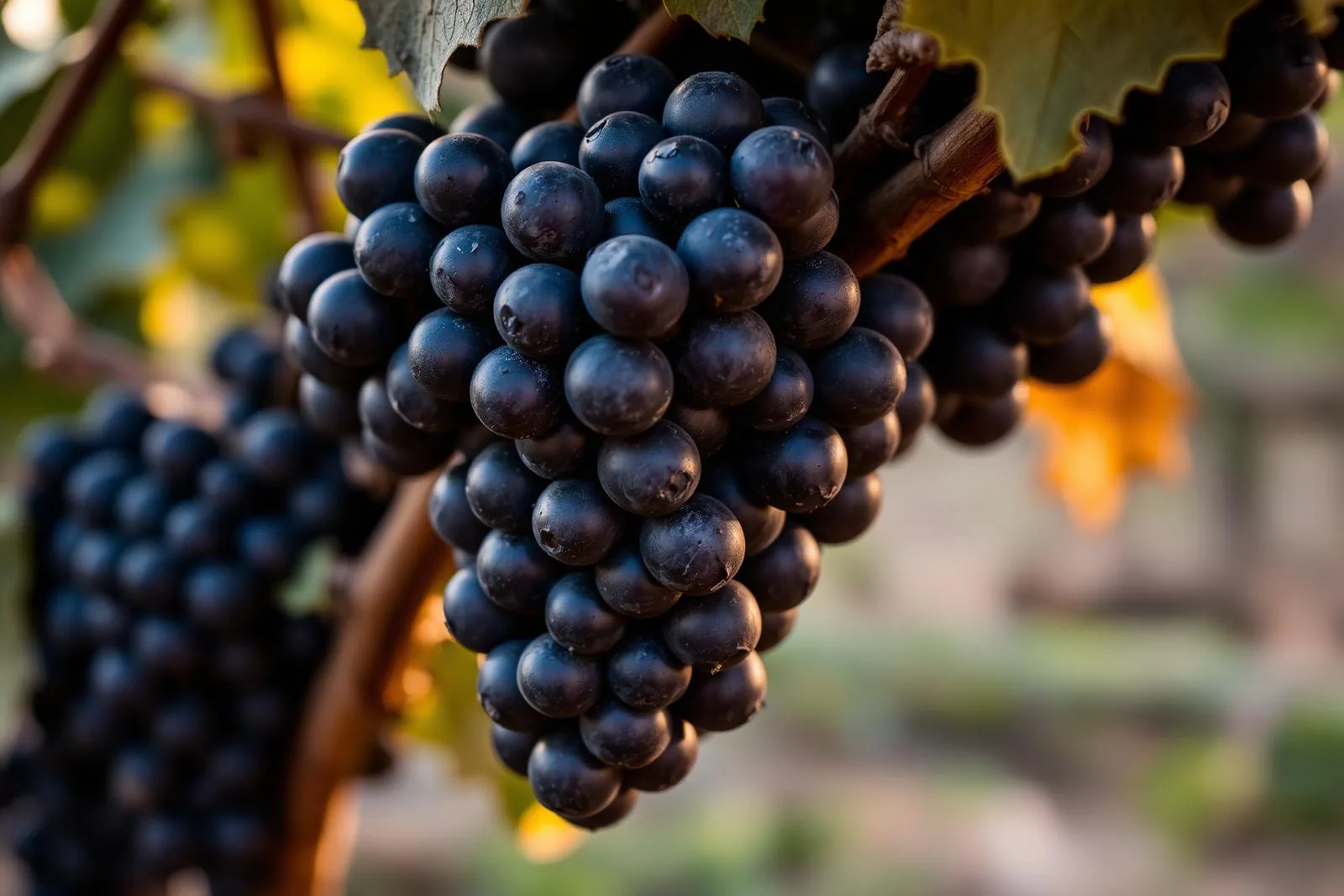
Moscato Giallo is one of the oldest and most aromatic members of the great muscat family. The grape is recognisable by its golden, almost amber-coloured berries and its characteristic aroma of orange blossom, nutmeg and honey. From the alpine slopes of northern Italy it produces wines ranging from bone-dry and mineral to sweet passiti — always with the same perfumed signature. Read more about the Italian wine regions and other aromatic Italian grapes such as Fiano and Greco.
History and origins
Muscat grapes are thought to have been grown around the Mediterranean since antiquity — Greeks and Romans wrote about their sweet, fragrant fruit. Moscato Giallo is likely one of the oldest clones, and became established early in the German-speaking wine villages of Alto Adige (Südtirol), where it is still known as Goldmuskateller. Today the grape is grown mainly in Trentino-Alto Adige, Veneto (around Colli Euganei) and Friuli, with small plantings also found in Emilia and further south.
Unlike its more famous relative Moscato Bianco — the grape behind Moscato d'Asti — Moscato Giallo thrives in cooler, higher-altitude sites. The slopes around Bolzano and Bressanone, with their mix of porphyry, limestone and marked alpine temperature swings, give the grape unusually high acidity and a distinct mineral core that balances the sweetness of its aroma.
The Moscato family: Giallo, Bianco and d'Asti
The name Moscato covers an entire family of related, aromatic grapes rather than a single variety. The most common are:
- Moscato Bianco (Moscato di Canelli) — Piedmont's grape behind the light, sparkling and sweet Moscato d'Asti and Asti Spumante. Low alcohol, high sweetness and a direct, perfumed grapey character.
- Moscato Giallo (Goldmuskateller) — the grape in this guide. Fuller-bodied, usually still, often dry or off-dry, with high acidity from the cool alpine sites of northern Italy.
- Moscato Rosa — a pink-skinned, very rare relative grown in the same alpine zones, producing fragrant, sweet rosé wines in small volumes.
The difference in the glass is clear: Moscato d'Asti is a festive, easy-drinking way to finish a meal at just 5–5.5% alcohol, while Moscato Giallo is more often a fully grown food wine at 12–13.5% alcohol that can accompany an entire menu.
Where it grows
- Alto Adige (Südtirol) — the heartland, around Bolzano, Termeno and Bressanone, where the grape is called Goldmuskateller and often trained on pergola on steep terraces.
- Trentino — its own DOC for Moscato Giallo, in both dry and sweet styles, and the base of the historic dessert wine Vino Santo Trentino in some interpretations.
- Veneto — Colli Euganei southwest of Padua, home to Fior d'Arancio DOCG, named after the grape's orange-blossom scent.
- Friuli — smaller but quality-focused plantings, often in a dry style with a focus on minerality.
The best sites share altitude (300–700 metres above sea level), a wide diurnal range and limestone or volcanic soil — conditions that preserve acidity and sharpen the grape's otherwise exuberant aroma.
Classifications: DOC and DOCG
- Alto Adige DOC Goldmuskateller — the varietal appellation in Südtirol, usually dry or off-dry, occasionally also as passito.
- Trentino DOC Moscato Giallo — covers both still and sweet versions, including lightly sparkling styles.
- Colli Euganei Fior d'Arancio DOCG — Veneto's only DOCG for the grape, made in still, sparkling (spumante) and passito form. The name refers to the intense orange-blossom aroma.
- Moscato Giallo/Goldmuskateller Passito — a sweet, dried-grape style that appears within several of the above appellations rather than as its own DOC.
Flavour profile and aroma
Moscato Giallo is one of the few grapes whose aroma instantly gives away the variety. In the glass you will almost always find:
- Floral: orange blossom, acacia, jasmine and lime blossom
- Fruity: peach, apricot, ripe pear and candied citrus
- Spice: nutmeg, ginger and a hint of white pepper
- Sweet notes: honey, marzipan and occasionally a touch of chamomile
On the palate the grape is versatile. Dry versions (secco) have high acidity, medium body and a lightly bitter almond finish that tightens the exuberant aroma. Off-dry and sweet wines (passito or vendemmia tardiva) are concentrated, oily in texture, and can age for decades without losing their floral character.
Dry, off-dry and passito styles
Moscato Giallo's versatility lies in the fact that the same grape can give entirely different wines depending on harvest timing and winemaking:
- Secco (dry)
- Harvested at normal ripeness and fermented fully dry. High acidity, medium body and a lightly bitter almond finish. The most common style in Alto Adige and Friuli.
- Vendemmia tardiva (late harvest)
- The grapes hang longer on the vine for more sugar and concentration. Off-dry, oily texture, but retains fruit and floral character.
- Passito
- The grapes are dried on straw mats or in well-ventilated rooms for several weeks before pressing. Produces concentrated, sweet dessert wines with long ageing potential.
Viticulture and winemaking
Moscato Giallo is a late-ripening grape that needs long, bright autumns to reach full aromatic ripeness. The best sites lie at 300–700 metres above sea level, where cold nights preserve acidity while sunny days build the terpenes that give the characteristic muscat aroma. Harvest happens late in September or into October, and for passito wines the grapes are dried on straw mats or in well-ventilated rooms for several weeks to concentrate sugar and aroma.
Fermentation usually takes place in stainless steel at low temperatures to preserve the volatile aromas. Oak ageing is uncommon — the grape's own perfume is so expressive that oak notes tend to disturb rather than complement it.
Vintages and ageing
The climate in these alpine growing areas makes vintage variation noticeable. Warm, sunny years give fuller, more perfumed wines with lower acidity, while cooler years with a late harvest give tighter, more mineral wines that keep longer. Rain right before harvest is the biggest risk for dry and off-dry styles, while passito grapes need dry, airy weather during the drying period.
- Dry and off-dry: drink within 2–3 years to preserve the fresh, floral aroma
- Vendemmia tardiva: 3–6 years, often best after a couple of years in bottle
- Passito: 10–20 years, sometimes longer thanks to high sugar and acidity
What does a good Moscato Giallo cost?
Moscato Giallo is rarely a budget wine — the grape's low yields and demanding cultivation on steep alpine sites make it more expensive to produce than many other white grapes. Dry wines from Alto Adige and Colli Euganei are often found around SEK 150–250. Passito versions, which require weeks of manual drying and give lower yields, usually sit between SEK 250 and 450 for a half bottle.
Compared with other aromatic white wines, such as Gewürztraminer from the same region, Moscato Giallo often sits in a similar or slightly higher price range thanks to its limited production. Contact us if you would like suggestions from our range.
Food pairing
Moscato Giallo's aromatic profile makes it one of Italy's most rewarding food wines — especially with cuisines where spice and sweetness meet.
- Dry Moscato Giallo
- Thai and Vietnamese dishes, sushi, ceviche, goat's cheese salads, asparagus with hollandaise and spicy chicken. The acidity and floral notes handle chilli and coriander where other wines lose their balance.
- Off-dry / vendemmia tardiva
- Foie gras, spicy charcuterie, aged hard cheeses such as Parmigiano stravecchio, Indian curries and smoked duck.
- Passito / dessert wine
- Blue cheeses (Gorgonzola dolce), almond pastries, apricot pannacotta, tarte tatin and panettone. Serve cool, around 10 °C.
Moscato Giallo vs Moscato d'Asti and Gewürztraminer
The relatives share an aroma family but differ noticeably in the glass. Moscato Bianco — grown in Piedmont and behind Moscato d'Asti — is lighter, lower in alcohol and almost always slightly sweet and sparkling. Moscato Giallo is fuller-bodied, drier in its classic form, and grown in cooler alpine sites. Where Moscato d'Asti is a festive way to finish a meal, Moscato Giallo is a food wine that can carry you from starter to cheese board.
Against Gewürztraminer, grown in the same parts of Alto Adige, the difference is more subtle. Gewürztraminer smells more of roses, lychee and spice with relatively low acidity and an oily texture. Moscato Giallo has a cleaner citrus and orange-blossom aroma, higher acidity and a lighter, more structured body — one reason it works so well as a food wine rather than an after-dinner sipper.
Serving
- Dry: 8–10 °C in a medium-sized white wine glass
- Off-dry: 9–11 °C
- Passito: 10–12 °C in a smaller dessert wine glass
- Do not decant — the volatile aroma loses intensity quickly
Frequently asked questions
- What is Moscato Giallo?
- An aromatic white grape from the muscat family grown mainly in northern Italy — Trentino-Alto Adige, Veneto and Friuli. It is called Goldmuskateller in German and is recognised by its aroma of orange blossom, nutmeg and honey.
- What is the difference between Moscato Giallo and Moscato Bianco?
- Moscato Bianco is grown in Piedmont and produces the light, low-alcohol Moscato d'Asti. Moscato Giallo is fuller bodied, often dry, with higher acidity and grown in cooler alpine sites — a food wine rather than a dessert wine.
- What is the difference between Moscato Giallo and Moscato d'Asti?
- Moscato d'Asti is a lightly sparkling, sweet wine made from Moscato Bianco in Piedmont, with low alcohol around 5.5%. Moscato Giallo is usually a still wine, drier and fuller bodied, from the cool alpine sites of Trentino-Alto Adige, Veneto and Friuli.
- Is Moscato Giallo the same grape as Gewürztraminer?
- No, but they are grown in the same region and share a perfumed, floral style. Gewürztraminer smells more of roses, lychee and spice and has lower acidity, while Moscato Giallo is dominated by orange blossom, nutmeg and a clearer acidic core.
- What food goes with Moscato Giallo?
- Dry Moscato Giallo suits Thai dishes, sushi, ceviche, goat's cheese salads and spicy chicken. Sweet passito versions suit Gorgonzola dolce, almond pastries, pannacotta and panettone.
- At what temperature should Moscato Giallo be served?
- Dry Moscato Giallo is served at 8–10 °C, off-dry at 9–11 °C and passito at 10–12 °C. Do not decant — the volatile aroma loses intensity quickly.
- Where is Moscato Giallo grown?
- Mainly in Trentino-Alto Adige (Südtirol) around Bolzano and Bressanone, in Veneto (Colli Euganei) and in Friuli. Smaller plantings exist in Emilia and further south. The best sites lie at 300–700 metres above sea level.
- What is Colli Euganei Fior d'Arancio DOCG?
- It is the only DOCG dedicated entirely to Moscato Giallo, in the Colli Euganei hills of Veneto. The name means 'orange blossom' and describes the grape's most typical aroma. The wine is made in still, sparkling (spumante) and sweet passito form.
- How long can Moscato Giallo be aged?
- Dry and off-dry wines are best drunk within 2–3 years to preserve their fresh aroma. Passito and vendemmia tardiva have much longer lives and can develop beautifully over 10–20 years thanks to high sugar and acidity.
- What does a good Moscato Giallo cost?
- Dry wines from Alto Adige and Colli Euganei often cost SEK 150–250. Passito versions, which require more work and time, usually sit between SEK 250 and 450 for a half bottle.
In our range